
Share this product :
Maleic Anhydride
- Origin
- : China, Taiwan
- CAS Number
- : 108-31-6
- HS Code
- : 2917.14.00
Basic Info
- IUPAC Name
- : furan-2,5-dione
- Molecular Formula
- : C4H2O3
- Molecular Weight (g/mol)
- : 98.0600
- Synonyms & Trade Names
- : Maleic anhydride; cis-Butenedioic anhydride; 2,5-Furandione
- Purity / Assay (%)
- : 99.5% min
- Grade / Quality Level
- : Industrial Grade
- Physical Form
- : Solid
- Concentration
- : Pure substance
- Appearance / Color
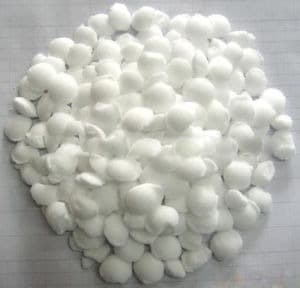
- : White to off-white solid
- Odor
- : Pungent, acrid
- Melting Point (°C)
- : 53.0000
- Boiling Point (°C)
- : 202
- Density (g/cm³)
- : 1.4800
- Solubility in Water
- : Reacts with water
- Signal Word
- : Danger
- UN Number
- : 2215
- GHS Hazard Class
- : Acute toxic; Skin corrosive; Respiratory sensitizer; Carcinogen
- H-Statements
- : H302|H312|H314|H317|H331|H332|H334|H351
- P-Statements
- : P201|P261|P264|P271|P272|P273|P280|P301+P330+P331
- REACH Status
- : Registered
- Drug Precursor Status
- : Non-precursor
- Storage Class (GHS)
- : 8
- Storage Conditions
- : Dry conditions; protect from moisture; keep away from bases
Categories
Share this product :
Description: Maleic anhydride is an organic compound with the formula C2H2(CO)2O. It is the acid anhydride of maleic acid. It is a colorless or white solid with an acrid odor. It is a highly reactive chemical intermediate with potential uses in almost every field of industrial chemistry. Maleic anhydride is used in the production of unsaturated polyester resin as well as in the manufacturing of coatings, surfactants, pharmaceuticals, agricultural products like pesticides and as an additive for plastics. It is produced industrially on a large scale with a market size of USD 2.77 billion in 2018 and is projected to expand at a CAGR of 6.7% from 2019 to 2025.
Manufacturing Process: Maleic anhydride is produced by vapor-phase oxidation of n-butane. The overall process converts the methyl groups to carboxylate and dehydrogenates the backbone. The selectivity of the process reflects the robustness of maleic anhydride, with its conjugated double-bond system. Traditionally maleic anhydride was produced by the oxidation of benzene or other aromatic compounds. As of 2006, only a few smaller plants continue to use benzene. In both cases, benzene and butane are fed into a stream of hot air, and the mixture is passed through a catalyst bed at high temperature. The ratio of air to hydrocarbon is controlled to prevent the mixture from igniting. Vanadium pentoxide and molybdenum trioxide are the catalysts used for the benzene route, whereas vanadium phosphate is used for the butane route:
C4H10 + 3.5 O2 → C4H2O3 + 4 H2O
The main competing process entails full combustion of the butane, a conversion that is twice as exothermic as the partial oxidation. The traditional method using benzene became uneconomical due to the high and still rising benzene prices and by complying with the regulations of benzene emissions. In addition, in the production of maleic anhydride (4 C-atoms) a third of the original carbon atoms is lost as carbon dioxide when using benzene (6 carbon atoms). The modern catalytic processes start from a 4-carbon molecule and only attaches oxygen and removes water; the 4-C-base body of the molecule remains intact. Overall, the newer method is therefore more material efficient. Parallels exist with the production of phthalic anhydride: While older methods use naphthalene, modern methods use o-xylene as feedstock.


